

What's the typical sell house timeline in Oregon?
Selling a home in Oregon to fund senior care typically takes a few months from preparation through closing. That range covers everything: getting the house ready, listing it, reviewing offers, navigating inspections, and finally closing. For families facing an urgent care placement, that window can feel impossibly long. The good news is that local cash buyers can compress the entire process to as few as 7 days.
Here's how the phases break down:
- Pre-listing preparation (1–4 weeks): decluttering, minor repairs, pricing analysis, agent selection
- Active listing period (2–6 weeks): showings, offers, negotiation
- Under contract (1–2 weeks): inspection, appraisal, contingencies
- Closing process (30–45 days for financed buyers; 7–14 days for cash)
| Phase | Traditional Sale | Cash Buyer |
|---|---|---|
| Pre-listing | Several weeks | A few days |
| Offer to contract | Several weeks | Hours to one day |
| Inspection/appraisal | About one to two weeks | Often waived |
| Closing | About one to one and a half months | About one to two weeks |
| Total | A few months | About one to two weeks |
Listing publicly on the MLS matters for price. Sellers who listed off the MLS lost an average of $6,000 compared to public listings. For families who have time, a public listing is worth it. For families who don't, a cash buyer is the practical answer.
Costs add up fast in a traditional sale. Agent commissions typically run a percentage of the sale price, plus closing costs and any repairs negotiated after inspection. Cash buyers eliminate most of those fees entirely.
Table of Contents
- Which local cash buyers in Portland can close fastest?
- How to prepare your home quickly during a senior care transition
- What are the typical steps to sell a house?
- How long does each selling phase actually take?
- How do you evaluate a local cash home buyer?
- What legal and paperwork steps affect your timeline?
- Divinetransitionsforseniors coordinates the whole process for Oregon families
- Key Takeaways
Which local cash buyers in Portland can close fastest?
For Oregon families who need funds quickly, three local cash buyers stand out for speed, transparency, and track record.
Better Off Home Buyers carries a BBB accreditation with an A+ rating and is featured as a local expert on Redfin. They buy homes as-is, charge no commissions or closing costs, and close as fast as 7 days. Their cash offer comes within 24 hours of contact. For a family trying to secure a memory care placement this month, that turnaround is real.
Sell My House Fast Portland Oregon covers the full Portland metro area and handles situations most buyers won't touch: probate, foreclosure, fire damage, tax liens, and major repair needs. They pay all closing costs, require no repairs, and deliver a no-obligation cash offer within 24 hours. Closing runs 7–21 days depending on the seller's preferred schedule.
Bridgetown Home Buyers focuses on Portland and broader Oregon, buying single-family homes, duplexes, triplexes, quads, and vacant lots. Cash offers arrive within 24 hours, and they close in 7–10 days with no fees or commissions.
| Buyer | Offer turnaround | Closing speed | Fees/commissions | Condition required | Service area |
|---|---|---|---|---|---|
| Better Off Home Buyers | 24 hours | As fast as 7 days | None | Any condition | Portland, Oregon |
| Sell My House Fast Portland Oregon | 24 hours | 7–21 days | None | Any condition | Portland metro |
| Bridgetown Home Buyers | 24 hours | 7–10 days | None | Any condition | Portland, Oregon |
Priority Homes and Sell Oregon Homes also operate in the Oregon market buying homes for cash, though specific turnaround and fee details are not publicly listed for those two.
Cash sales do involve a trade-off. Selling to a cash buyer often means accepting below full market value, but the certainty and speed frequently outweigh that gap when a care placement cannot wait.
How to prepare your home quickly during a senior care transition
Pre-listing preparation is where families lose the most time without realizing it. Neglecting to manage personal belongings alongside basic repairs is the single biggest cause of a longer sale. Start both tracks at the same time.
Practical steps to move fast:
- Remove personal items, excess furniture, and medical equipment from common areas first
- Address only the repairs that affect buyer perception or inspection outcomes: leaky faucets, broken fixtures, doors that don't close
- Arrange a storage unit or pod early so belongings can leave the home in stages
- Coordinate the belongings downsizing schedule with the expected care placement date, not after it
Pro Tip: Set your target care placement date first, then work backward to set your listing date. That single step prevents the most common timing mistake families make.
Once listed, homes must be ready for showings with very little notice. A house that still contains a full lifetime of belongings makes that nearly impossible. Starting the downsizing process before listing, not during, keeps the sale on track.
Effective staging and belongings downsizing can meaningfully reduce time on market, especially when the family is working against a care placement deadline.
What are the typical steps to sell a house?
The house selling process follows a predictable sequence regardless of urgency. Knowing each step helps families spot where delays are most likely to occur.
- Set your timeline and pricing based on local market conditions and your care funding deadline
- Hire a real estate agent or contact a cash buyer directly
- Prepare the home through decluttering, repairs, and staging
- List publicly on the MLS and major real estate platforms
- Review offers and negotiate terms, including closing date flexibility
- Accept an offer and enter the under-contract period
- Navigate inspection and appraisal, responding to any repair requests
- Close the sale, sign final documents, and receive proceeds
For families using a cash buyer, steps 4 through 7 collapse into a single conversation.
How long does each selling phase actually take?
The total time to sell a house typically spans several months for a traditional financed sale. Breaking that down by phase shows where the time actually goes.
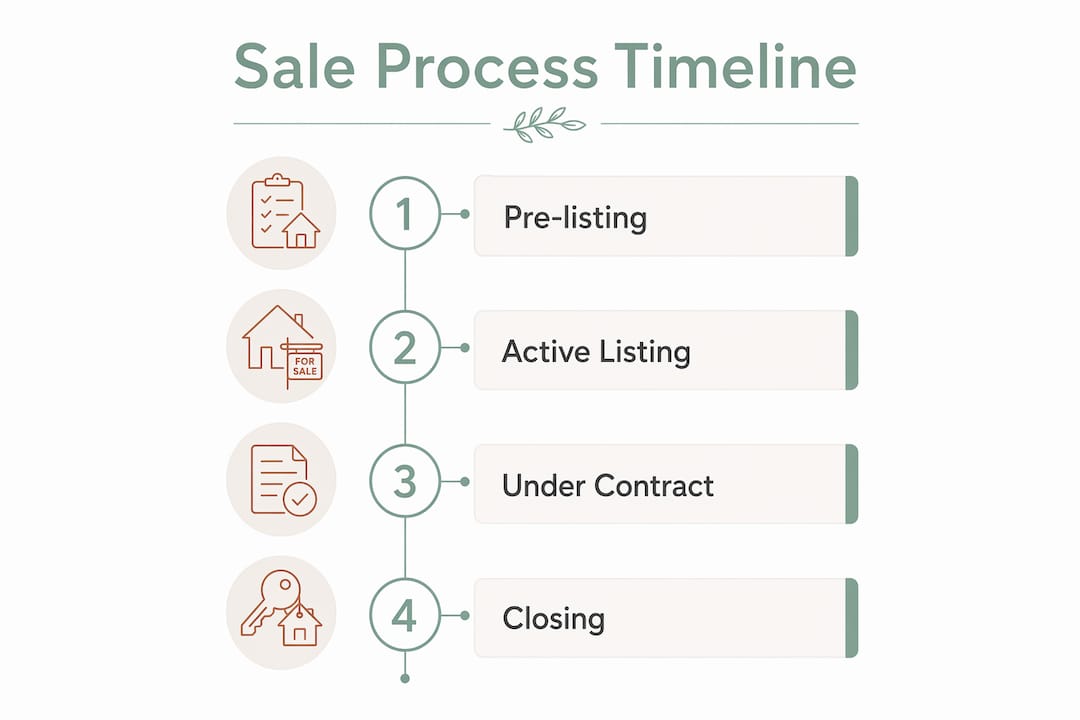
Pre-listing (1–4 weeks): Pricing analysis, repairs, photography, and agent selection. Skipping this phase causes longer days on market later.

Active listing (median 50–56 days nationally): Homes priced at or below comparable sales go under contract in a median of 14 days. Homes that need a price cut average 70+ days. Spring listings in Oregon tend to sell faster and at higher prices.
Under contract (1–2 weeks): The buyer schedules a home inspection within 7–10 days of offer acceptance. Repair negotiations follow, typically taking 3–7 days. The appraisal runs concurrently for financed buyers.
Closing (30–45 days): The closing process takes 30–45 days for financed buyers. This period involves lender underwriting, title work, and final document preparation. It is not passive waiting. Deal terms can still shift during this window.
How do you evaluate a local cash home buyer?
Not every cash buyer operates the same way. A few questions separate credible buyers from ones to avoid.
Ask whether they have BBB accreditation and what their rating is. Ask for references from recent Oregon transactions. Request the offer in writing before signing anything, and confirm there are no hidden fees buried in the contract.
Red flags to watch for:
- Pressure to sign within hours of receiving an offer
- Vague or verbal-only offers with no written documentation
- Requests for upfront fees before closing
- No verifiable local track record or reviews
Fair pricing from a cash buyer will typically come in below full market value. That is expected. What matters is whether the net proceeds, after accounting for the commissions and costs you avoid, cover your care funding needs. Run that math before comparing a cash offer to a traditional listing price.
What legal and paperwork steps affect your timeline?
Oregon requires a seller's disclosure statement before or at the time of an accepted offer. This document covers known material defects and must be completed accurately. Errors or omissions can delay or derail a closing.
Title work runs concurrently with the closing process and typically takes 7–14 days. The title company checks for liens, unpaid taxes, or ownership disputes that could block the transfer. For homes that have been in a family for decades, this step occasionally surfaces issues that need resolution before closing.
For estates or situations involving a power of attorney, additional legal documentation is required before any sale can proceed. Families in those situations should engage an Oregon real estate attorney early, not after an offer is accepted.
Divinetransitionsforseniors coordinates the whole process for Oregon families
When a stroke, fall, or dementia diagnosis forces a family to act fast, the home sale is only one piece of the problem. The belongings still need sorting. The care placement still needs coordinating. And most families are doing all of this while managing a medical crisis.

Divinetransitionsforseniors works with families throughout Oregon and Washington to coordinate the home sale, manage the personal belongings transition, and connect families with trusted senior placement specialists, all at no cost to the family. The service earns referral fees through its network of real estate agents and placement specialists, so families pay nothing directly. For senior care transitions in Oregon, that means one point of contact instead of five, and a timeline that actually aligns with when your loved one needs care.
Contact Divinetransitionsforseniors today to get a personalized plan that matches your home sale schedule to your care placement timeline.
Key Takeaways
The fastest path to funding senior care through a home sale in Oregon is a local cash buyer, which can close in as few as 7 days versus 30–90 days for a traditional financed sale.
| Point | Details |
|---|---|
| Traditional sale timeline | A financed Oregon home sale typically takes 30–90 days from preparation through closing. |
| Cash buyer speed | Local cash buyers close in 7–14 days with no commissions, no repairs, and 24-hour offers. |
| Pre-listing is the hidden delay | Skipping belongings downsizing and repairs before listing is the top cause of extended days on market. |
| Closing is active, not passive | The 30–45 day closing period involves inspections, appraisals, and title work where deal terms can still change. |
| Divinetransitionsforseniors | Coordinates home sales, belongings management, and care placement at no cost to Oregon and Washington families. |