

When a parent moves into assisted living or memory care, one of the last things most families think about is the homeowner's insurance. But if the home sits empty for too long, your existing policy may no longer provide the protection you expect. Understanding what happens—and taking a few simple steps early—can help protect one of your family's largest assets while you decide what comes next.
-
Your HO-3 policy has a vacancy threshold generally around one to two months.
-
After that threshold (30 to 60 consecutive days), key perils such as vandalism, theft, and water damage may be excluded or suspended. Two main options exist: an unoccupied endorsement or a standalone vacant policy. Acting before the 30-day mark is the only way to guarantee no gap.
Table of Contents
-
What insurers mean by “vacant” and why the definition can cost you
-
When a family needs to sell fast, Divinetransitionsforseniors can help
What insurers mean by “vacant” and why the definition can cost you
The words “unoccupied” and “vacant” sound interchangeable, but insurers treat them very differently. An unoccupied home still has furniture, appliances, and personal belongings inside — the owner is just temporarily away. A vacant home has been cleared out, with no signs that anyone plans to return soon.
That distinction materially changes which product you need and whether a claim will be paid. Courts have repeatedly upheld vacancy exclusions when a home was emptied of personal property, even when the owner believed coverage was still active.
“Policy language often leaves ‘vacant’ undefined; courts may rely on the plain meaning, which frequently disadvantages the insured — so homeowners should never assume coverage continues.” — Property Insurance Coverage Law Blog (Merlin Law Group)
The vacancy clause can also operate retroactively. If a loss occurs after the threshold, the insurer may deny claims for damage that happened while the property was already vacant. Many families discover this only after filing a claim.
Pro Tip: Notify your insurer before the home becomes vacant. Don’t wait until day 29 — some endorsements must be added before the vacancy clock expires.
Coverage options: endorsement or standalone vacant policy?
Two products fill the gap once your standard policy’s vacancy clause kicks in.
Unoccupied endorsement: An add-on to your existing homeowners policy that suspends the vacancy restrictions. It works best for shorter gaps — a few months while a home is listed for sale or during a job relocation. Utilities should remain on, furniture should still be present, and regular property checks are typically required. Cost: somewhat more than your current premium.
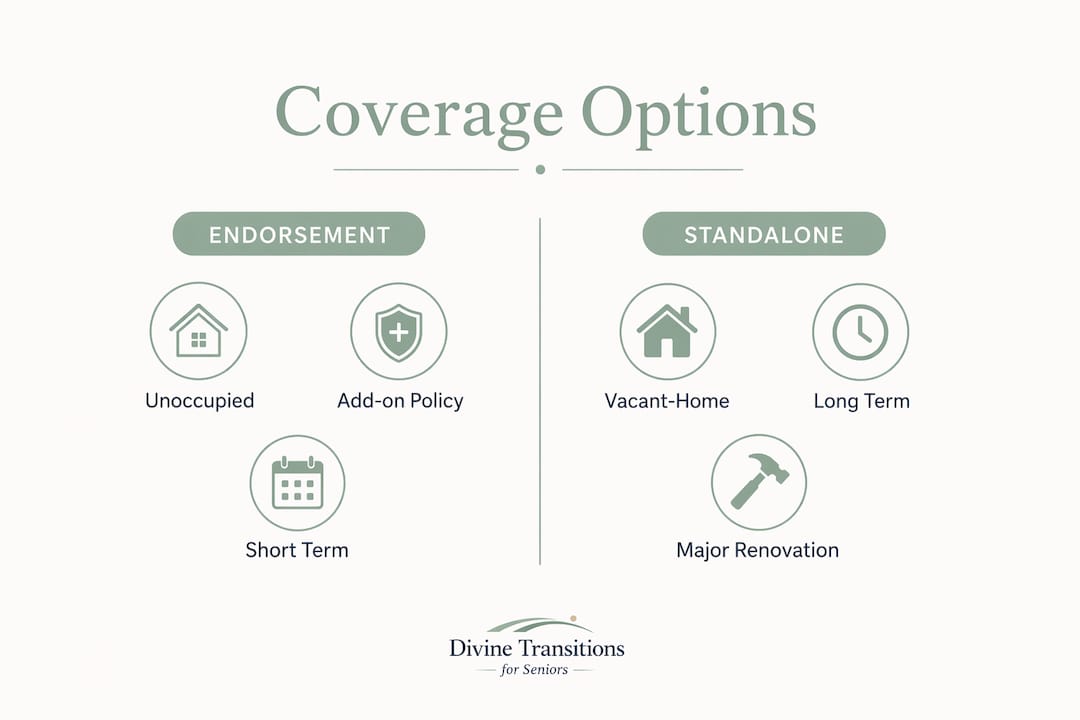
Standalone vacant-home policy: Purpose-built for homes that will sit empty for an extended stretch — probate, major renovation, or a prolonged listing. These policies are sold in short terms (3, 6, or 12 months) and operate on a named-perils basis, meaning only listed risks are covered. Liability coverage is often excluded by default and must be added. Cost: significantly higher than a standard homeowners premium.
| Scenario | Better fit |
|---|---|
| Home listed for sale, furnished, under 60 days | Unoccupied endorsement |
| Probate or estate sale, contents removed | Standalone vacant policy |
| Renovation (cosmetic only) | Endorsement or vacant policy |
| Long-term empty or stripped of contents | Standalone vacant policy |
What insurers commonly require while a home is vacant
Meeting these conditions isn’t optional. Failure to comply gives the insurer grounds to deny a claim.
-
Documented inspections: Most policies require physical walk-throughs every 7–30 days, with written logs and dated photos noting property condition, any signs of intrusion, and confirmation that heat and security systems are working.
-
Functioning security: Deadbolt locks, alarm systems, and ideally remote monitoring (leak detectors, cameras).
-
Locked and secured openings: Boarded or locked windows and doors; no visible signs of forced entry.
-
Winterization or maintained heat: If pipes are live, heat must stay on or plumbing must be properly winterized.
-
Exterior maintenance: Mowed lawn, cleared walkways, no accumulated mail — visible neglect signals to both insurers and trespassers that no one is watching.
-
Proof of paid utilities or documented winterization when utilities are shut off.
Pro Tip: Hire a local property manager or trusted neighbor to handle inspections. Keep dated photos and a written log — that paper trail is your best defense if a claim is disputed.
For homes undergoing structural renovation, a standard vacant policy may not be enough. Gut renovations and foundation work typically require builder’s risk coverage, which is a separate product.
How much does vacant home coverage cost?
The national average for a standard homeowners policy runs around $1,228 per year. A full vacant-home policy averages significantly higher. An unoccupied endorsement is typically cheaper than a standalone vacancy policy, usually adding about 15–30% to your existing premium.
| Coverage type | Approximate annual cost |
|---|---|
| Standard homeowners (HO-3) | $1,228 |
| Unoccupied endorsement | $1,228 + 15–30% |
| Standalone vacant-home policy | $1,842 |
What drives the price higher:
-
Longer vacancy duration
-
Coastal or hurricane-prone location
-
Poor property condition or deferred maintenance
-
No monitored security system
-
Older electrical or plumbing systems
-
Surplus lines carrier (non-admitted market) vs. standard admitted carrier
For a home in Washington state, regional weather exposure and local crime rates will also factor into underwriting. Families selling a parent’s home to fund assisted living often face this cost during a period when every dollar matters — which is exactly why acting early and choosing the right product for the actual vacancy length saves money.
Step-by-step checklist to avoid a coverage gap
Days 0–7:
-
Call your insurance agent and confirm your HO-3 vacancy threshold.
-
Ask specifically about an unoccupied endorsement or vacancy permit.
-
Document the home’s current condition with photos and a written inventory.
-
Confirm whether utilities need to stay on for coverage to remain valid.
Weeks 1–4: 5. Arrange regular property checks (weekly or bi-weekly). 6. Install a monitored alarm or timed lighting if practical. 7. Keep utilities on or winterize plumbing if the home will be unheated.
Month 1 and beyond: 8. If vacancy will exceed your insurer’s threshold, move to a standalone vacant policy before the deadline. 9. Schedule and document all required inspections on a calendar. 10. Keep all receipts for maintenance, boarding, or security upgrades.
Pro Tip: Get every coverage conversation confirmed in writing via email. If a claim is ever disputed, that email chain is your proof that you disclosed the vacancy and requested the endorsement.
How to compare vacant home insurance policies
No single carrier dominates this space, and coverage terms vary enough that comparison shopping is worth the effort. When evaluating options, focus on these factors rather than brand names:
Named perils vs. open perils: Standard HO-3 policies use open-perils language (everything is covered unless excluded). Most standalone vacant policies use named-perils forms — only what’s listed is covered. Confirm whether vandalism, water damage, and liability are included or require add-ons.
Term flexibility: Vacant policies are commonly sold in 3-, 6-, or 12-month increments. If you’re unsure how long the home will sit empty, a longer term with a prorated refund clause gives you flexibility.
Inspection requirements: Some carriers require checks every 7–14 days; others allow 30-day intervals. Match the requirement to what you can realistically arrange.
Admitted vs. surplus lines: Standard admitted carriers offer more consumer protections. Surplus lines insurers cover higher-risk properties but operate with fewer regulatory guardrails. Know which type you’re buying.
Lender requirements: If there’s a mortgage, the lender may force-place insurance if your policy lapses — often at several times the cost of a voluntary vacant policy, with coverage focused on the bank’s interest, not yours.
For families comparing homeowners insurance options across different situations, understanding what each policy form actually covers is more useful than comparing premium quotes alone.
How to file a claim on a vacant home
Filing a claim on a vacant property follows the same basic steps as any homeowners claim, but the scrutiny is higher.
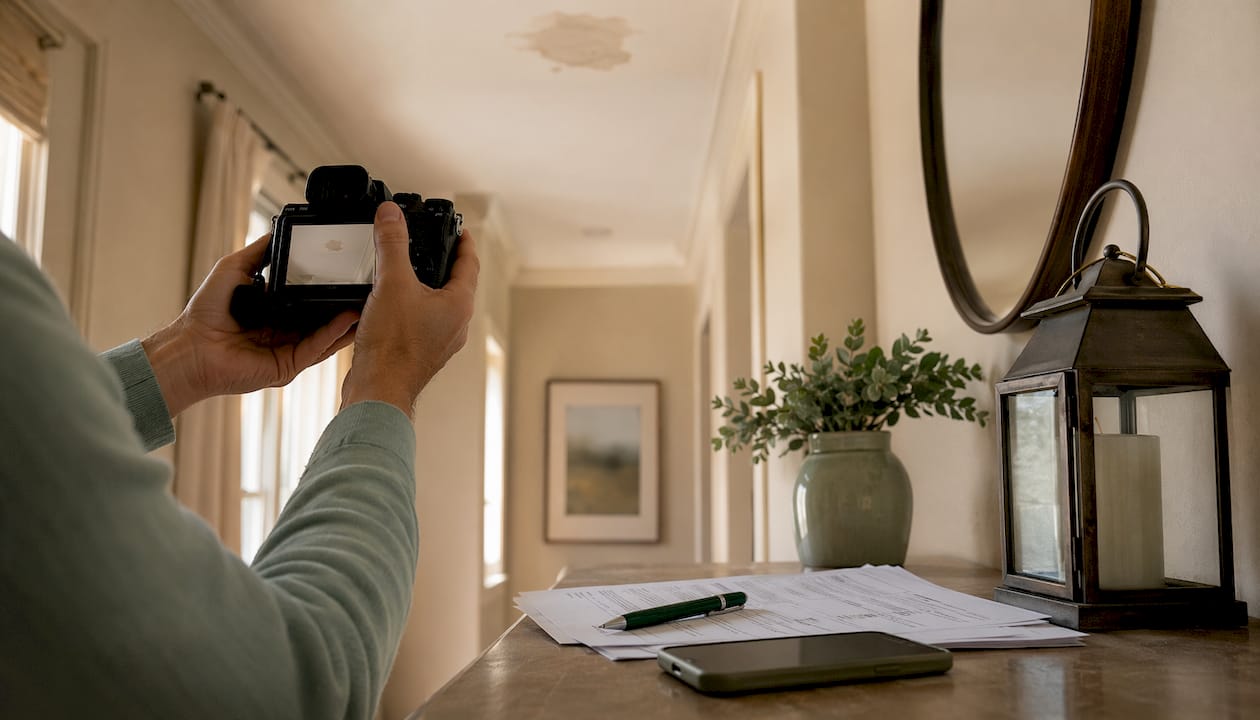
Document everything before you call. Photograph all damage immediately, note the date you discovered it, and pull your inspection logs showing the property was being monitored. Insurers will ask when the damage likely occurred — if it predates your last documented inspection, that gap can complicate the claim.
Report promptly. Delayed reporting on a vacant property is a common reason claims are reduced or denied. Insurers expect faster notification when damage could have worsened undetected.
Expect an adjuster inspection. The insurer will send an adjuster to assess the damage and verify the property’s condition matches your application and inspection records.
Know the exclusions going in. Standalone vacant policies on named-perils forms will not pay for losses outside the listed perils — no matter how severe. Gradual water damage, mold, and neglect are almost universally excluded. If the damage looks like it built up over time, expect a coverage dispute.
How Divine Transitions Helps Families Protect the Home During a Senior Transition
When a parent moves suddenly into memory care or assisted living, the family home can sit empty for weeks or months while everyone figures out next steps. That gap is exactly when vacant property coverage matters most — and when the logistics of a home sale, belongings cleanout, and insurance coordination all land on the same adult child at once.

While families are focused on finding the right care, it's easy for important details like vacant home insurance, property maintenance, and preparing the home for sale to be overlooked. Divine Transitions helps coordinate those moving pieces by connecting families with trusted professionals and creating a plan for the home while their loved one receives the care they need.
If your family is facing this situation now, reach out to Divinetransitionsforseniors for a free consultation. The goal is to help families protect the home while making informed decisions about the next steps.
Key Takeaways
A standard HO-3 policy stops covering vandalism, theft, and water damage after 30–60 days of vacancy — acting before that threshold is the single most important step any homeowner can take.
| Point | Details |
|---|---|
| HO-3 vacancy cliff | Standard policies suspend key perils after 30–60 consecutive days of vacancy. |
| Endorsement cost | An unoccupied endorsement typically adds a moderate premium increase to your existing policy. |
| Standalone policy cost | A full vacant-home policy averages around $1,842 per year nationally, which is about 50–60% more than a standard homeowners policy. |
| Inspection requirement | Most vacant policies require documented property checks on a regular interval to keep coverage active. |
| Divinetransitionsforseniors | Coordinates as-is home sales and property readiness for Washington families, reducing the vacancy window and coverage risk. |
A calm word to families making fast decisions
When a parent’s health changes overnight, the house becomes one more urgent problem on a very long list. The good news: a coverage gap is one of the more fixable problems on that list, as long as you move before the 30-day mark.
Most families in this situation aren’t insurance experts, and they shouldn’t have to be. The steps are straightforward — call the agent, document the condition, arrange inspections, and match the policy type to the actual vacancy length. What makes it hard is doing all of that while also coordinating care, managing family dynamics, and trying to make a good financial decision under pressure.
Balancing speed with coverage is possible. A quick as-is sale shortens the vacancy window; proper documentation protects the claim if something goes wrong before closing. Families navigating assisted living placement alongside a home sale don’t have to manage those timelines alone. Divine Transitions for Seniors exists precisely for this moment.
This article is general information, not legal or insurance advice. Confirm your policy’s specific vacancy terms with your agent or a licensed insurance professional.
Where to learn more
-
Property Insurance Coverage Law Blog (Merlin Law Group): Legal commentary on how courts interpret vacancy clauses and why undefined policy language usually disadvantages the insured.
-
Surety Insights — The Vacancy Clause: Explains the “silent self-destruct” nature of vacancy clauses, retroactive denials, and forced-place insurance risk.
-
Home Insurance Authority — Vacant Home Insurance: Covers policy structure differences between HO-3, unoccupied endorsements, and standalone vacant products.
-
Mark Reid Insurance — Vacant Homes and Insurance Risks: Practical breakdown of insurer inspection requirements and documentation standards.
-
WalletGrower — Vacant Home Insurance 2026: National average premium data ($1,228 standard vs. $1,842 vacant) and endorsement cost ranges.
Save these links before your next agent conversation. Bring the Surety Insights and Merlin Law Group pieces if you’re dealing with a disputed claim or a policy that doesn’t define “vacant” clearly.
FAQ
Does a standard homeowners policy cover a vacant home?
Not fully. Most HO-3 policies reduce or suspend coverage for vandalism, theft, and water damage after 30 to 60 consecutive days of vacancy — you need an endorsement or a separate vacant policy to fill that gap.
What is the difference between unoccupied and vacant home insurance?
An unoccupied home still has furniture and belongings inside; a vacant home has been cleared out. Vacant policies are narrower in coverage and cost about 50–60% more than a standard homeowners premium.
How much does vacant home insurance cost?
A standalone vacant-home policy averages $1,842 per year nationally, compared to $1,228 for a standard homeowners policy. An unoccupied endorsement is typically cheaper, usually adding about 15–30% to your existing premium.
What happens if I don’t get vacant home insurance?
If a loss occurs after your policy’s vacancy threshold, the insurer can deny the claim retroactively. If you have a mortgage and your policy lapses, the lender may force-place insurance at a much higher cost with limited coverage.
Can I get short-term vacant home insurance?
Yes. Standalone vacant policies are commonly sold in 3-, 6-, or 12-month terms, making them practical for families selling a home, managing an estate, or waiting on a renovation to finish.